Why Weight Benches Fail: The Engineering Nobody Explained
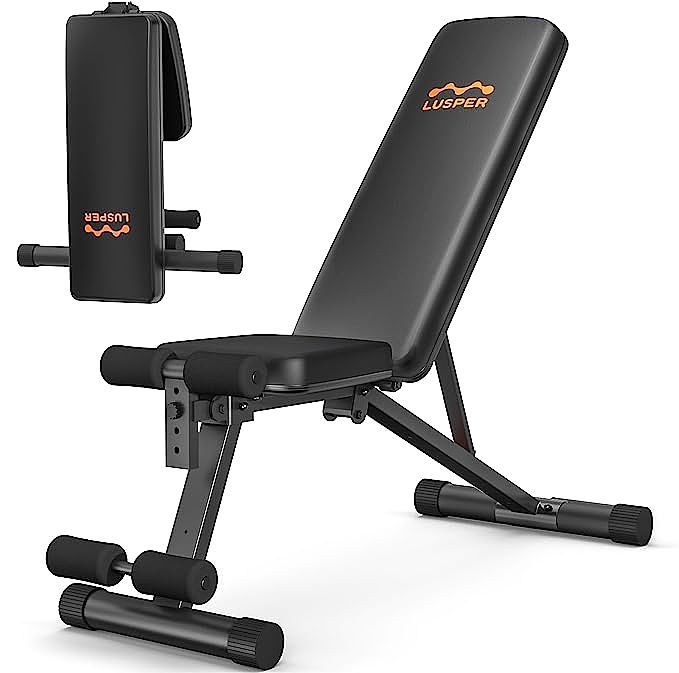
Lusper Adjustable Weight Bench
The bar slips. Not much — just a centimeter. But that centimeter is the distance between a clean rep and a trip to the emergency room. You feel the bench shift beneath you, a slight lateral wobble that turns a heavy dumbbell press from a controlled contraction into a survival exercise. You rack the weights. You stare at the bench. Something about it failed you, though the word "failed" feels too generous for what was really a design problem from the start.
This happens every day in home gyms across the country. A bench that looked sturdy in the product photos develops a rattle after three weeks. A backrest angle that was supposed to target your upper chest instead grinds your anterior deltoids into fatigue. A gap between the seat pad and the backrest creates a pressure point right where your lumbar spine needs support. These are not user errors. They are engineering failures — and they are far more common than the fitness industry admits.
The Geometry of Trust: Why Triangles Hold More Than Squares
Open any civil engineering textbook and you will encounter the truss — a structural framework built almost entirely from triangles. The reason is simple and unforgiving: a triangle is the only polygon that cannot deform without changing the length of its sides. A square frame can collapse into a parallelogram under load. A triangle cannot. This is not a design preference. It is a geometric law.
Weight benches that advertise high weight capacities — 600 pounds, for instance — rely on this principle whether their designers explicitly know it or not. The frame beneath the pad is not a random arrangement of metal bars. The diagonal braces, the triangulated support struts, the angled rear stabilizer bars — all of them convert downward force into tension and compression along the members of a triangular network. When you lie back with 200 pounds of combined body weight and dumbbells, that force does not simply press straight down into the floor. It radiates outward through the frame, following paths of least resistance along the triangulated structure, and the triangle ensures those paths terminate in stable compression rather than buckling failure.
Alloy steel — the material specified in most commercial bench frames — adds the material counterpart to this geometric strategy. According to the ASM International Materials Properties Handbook, alloy steel offers tensile strength in the range of 400 to 550 megapascals. That number describes how much pulling force the metal can endure before it stretches permanently. In practical terms, it means the frame members resist the bending and twisting forces that a lifting session generates. The material and the geometry work together: the steel provides the strength per unit, and the truss configuration ensures that strength is distributed efficiently across the entire frame.
But here is the detail most people miss: the stated weight capacity of a bench is a static rating. It describes what happens when you place a motionless load on the pad. During an actual lift, forces are dynamic. Research compiled in Hibbler's Engineering Mechanics: Dynamics demonstrates that acceleration forces during concentric and eccentric phases of a dumbbell press can multiply the effective load by 1.5 to 2 times the static weight. A 200-pound static load can momentarily exert 300 to 400 pounds of force during the acceleration phase of a press. This is why engineers build safety margins into capacity ratings — and why a bench rated at 600 pounds is not overbuilt for someone lifting 200. It is appropriately built.
The Anatomy of an Angle: How Degrees Change Which Muscles Fire
Stand in front of a mirror and place one hand on your upper chest, just below your collarbone. Now move your other hand to the lower portion of your pectoral muscle, near the sternum's base. These two regions — the clavicular head and the sternocostal head of the pectoralis major — are the same muscle, but they respond to different mechanical stimuli. Donald A. Neumann's Kinesiology of the Musculoskeletal System explains that the angle of your arm relative to your torso determines which fiber groups experience the greatest tension during a pressing movement.
On a flat bench, both heads contribute roughly equally. The humerus moves perpendicular to the torso, and the line of force distributes across the full width of the pectoralis major. Tilt the bench to an incline position — typically 30 to 45 degrees — and the geometry shifts. The humerus now moves at an upward angle relative to the torso, and the clavicular fibers, which originate on the collarbone, align more directly with the direction of force. Electromyography studies consistently show that incline angles above 30 degrees significantly increase upper pectoral activation while decreasing lower pectoral engagement.
Decline angles work in the opposite direction. By tilting the torso downward, the humerus drives at an angle that aligns with the sternocostal fibers. The lower chest does more work. The upper chest does less. This is not a matter of opinion or training philosophy. It is a consequence of vector mechanics applied to muscle fiber orientation.
A bench with eight adjustable backrest positions provides more than variety. It provides resolution. The difference between a 30-degree incline and a 45-degree incline is not trivial — it can shift the primary emphasis from the upper pectoralis major to the anterior deltoid. For someone training for balanced development, having multiple intermediate angles allows fine-tuning that a bench with only three or four positions simply cannot offer. Each degree of adjustment is a lever that redirects mechanical stress across the muscle's fiber map.

The Gap Problem: Ergonomics at the Point of Contact
There is a specific kind of pain that heavy bench press sets produce — not in the chest or shoulders, but in the lower back. It arrives as a dull ache that builds over sets, concentrated at the point where the lumbar spine curves away from the bench surface. Many lifters assume this is just part of the exercise. It is not. It is often the result of a design flaw that most bench manufacturers overlook: the gap between the seat pad and the backrest pad.
Research published in the Journal of Back and Musculoskeletal Rehabilitation has documented how continuous surface support reduces compressive forces on the lumbar vertebrae. When there is a one-to-two-inch gap between the seat and backrest, the lumbar spine — which naturally maintains a slight inward curve — has no surface to rest against at the transition point. The body compensates by engaging the erector spinae muscles to maintain position, which adds fatigue to a structure that should be passive during a pressing movement. Over multiple sets, this compensation accumulates into the lower back ache that many lifters mistake for a normal part of training.
The zero-gap design addresses this directly. By engineering the seat and backrest pads to meet flush at every angle, the bench provides a continuous support surface from the sacrum to the thoracic spine. The lumbar curve is supported rather than suspended. The erector spinae can remain relatively relaxed, and the force of the lift transmits cleanly through the torso into the bench rather than being dissipated through muscular tension in the back.
This is a small detail in the sense that it involves millimeters of pad alignment. But it is a large detail in the sense that it determines whether a bench supports your body's natural geometry or fights against it. Ergonomics, at its core, is the discipline of designing tools that conform to the human body rather than forcing the human body to conform to the tool.
The Ancient Contract: Progressive Overload and the Engineering That Serves It
Sometime around the sixth century BCE, a Greek wrestler named Milo of Croton began carrying a newborn calf on his shoulders every day. As the calf grew, so did Milo's strength. By the time the calf was a full-grown bull, Milo was reportedly the strongest man in the ancient world. Whether the story is literally true matters less than the principle it encodes: progressive overload, the idea that strength adapts to gradually increasing demands.
The National Strength and Conditioning Association recognizes progressive overload as one of the foundational principles of resistance training. The concept is simple — increase the stimulus, and the body adapts. But the engineering required to support that principle is anything but simple. As the loads increase, so do the forces acting on the equipment. A bench that feels stable at 100 pounds may exhibit frame flex at 200 and torsional instability at 300. The progression that builds the lifter's body simultaneously tests the bench's structural integrity.
This is the contract between training principle and equipment design. A well-engineered bench does not merely hold weight. It holds progressively increasing weight over thousands of repetitions, across multiple angles, under dynamic loading conditions, while maintaining dimensional stability and user comfort. The Lusper Adjustable Weight Bench, as one commercially available example, attempts to honor this contract through its combination of alloy steel construction, triangulated frame geometry, eight-position adjustability, and zero-gap padding. But the principle extends beyond any single product. The question every lifter should ask of their equipment is not "what is the weight limit?" but rather "how does this structure behave when the load becomes dynamic?"
The Folding Paradox: Engineering Stability into a Collapsible Frame
There is a tension — a genuine engineering contradiction — at the heart of every folding weight bench. The structure must be rigid enough to support hundreds of pounds of dynamic force, yet it must also include hinges and locking mechanisms that allow it to collapse flat for storage. Hinges are, by definition, points of potential movement. Movement is the enemy of stability. Reconciling these two requirements is one of the harder mechanical design problems in consumer fitness equipment.
The solution typically involves a locking pin or slot mechanism that converts the hinge from a flexible joint into a rigid connection when the bench is in its deployed configuration. The quality of this lock determines the quality of the bench. A poorly engineered lock allows micro-movements under load — those subtle shifts and rattles that erode confidence and force the lifter to stabilize the bench with their body rather than stabilizing their body with the bench. A well-engineered lock engages firmly, distributes shear forces across a wide contact area, and does not rely on friction alone to maintain position.
The folding mechanism also affects the geometry of the frame. Because the bench must fold, its frame often incorporates additional cross-members and stabilizer bars that would not be necessary in a fixed-frame design. These additional members, paradoxically, can increase structural rigidity in the deployed position — the very hinges that create the folding capability necessitate reinforcing elements that make the frame stronger overall. It is an example of a constraint producing an unintended benefit, something engineers encounter frequently when functional requirements push design in unexpected directions.
What Milo Would Recognize
If Milo of Croton walked into a modern home gym, he would not recognize the alloy steel, the adjustable backrest, or the folding mechanism. But he would recognize the fundamental transaction: a human body applying force against resistance, and a structure existing to make that force productive rather than destructive. The physics of truss structures, the biomechanics of muscle fiber orientation, and the ergonomics of continuous lumbar support are all in service of that same ancient transaction.
The bench does not build strength. You do. The bench's job is simpler and more demanding than that: it must disappear. When the engineering is correct — when the frame does not flex, when the angle holds without drift, when the padding supports without creating pressure points — the lifter stops thinking about the bench entirely. Attention moves to the muscle, to the rep, to the breath. The equipment becomes invisible precisely because it is doing its job. That invisibility is the highest compliment engineering can receive. It means the structure has earned the trust that was placed in it.
Lusper Adjustable Weight Bench
Related Essays
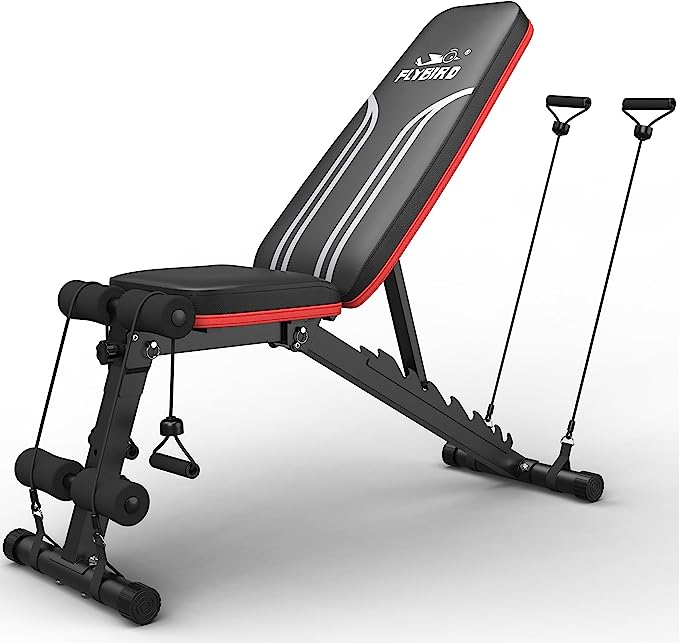
FLYBIRD Adjustable Weight Bench: Your Stable and Versatile Solution for Home Strength Training
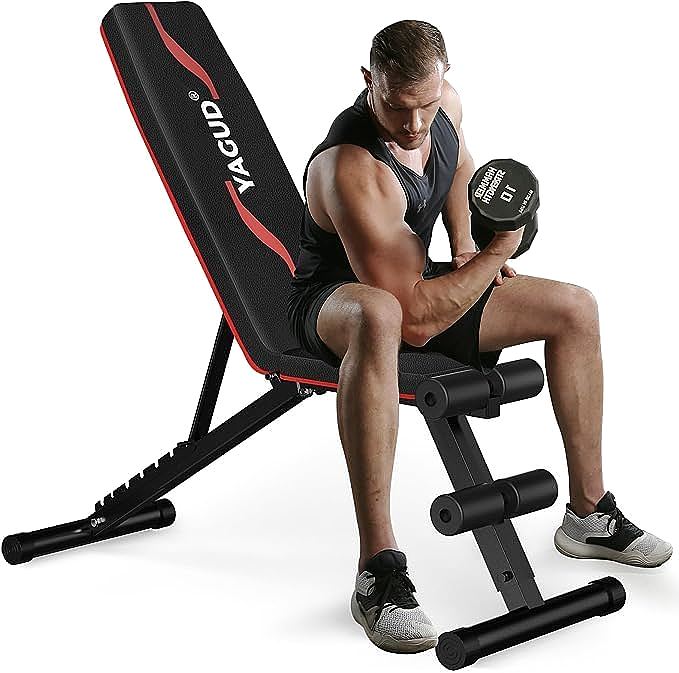
Yagud Weight Bench Press: Unlock Your Strength Potential with Stability and Versatility

The Geometry of Strength: Deconstructing the Modern Adjustable Weight Bench
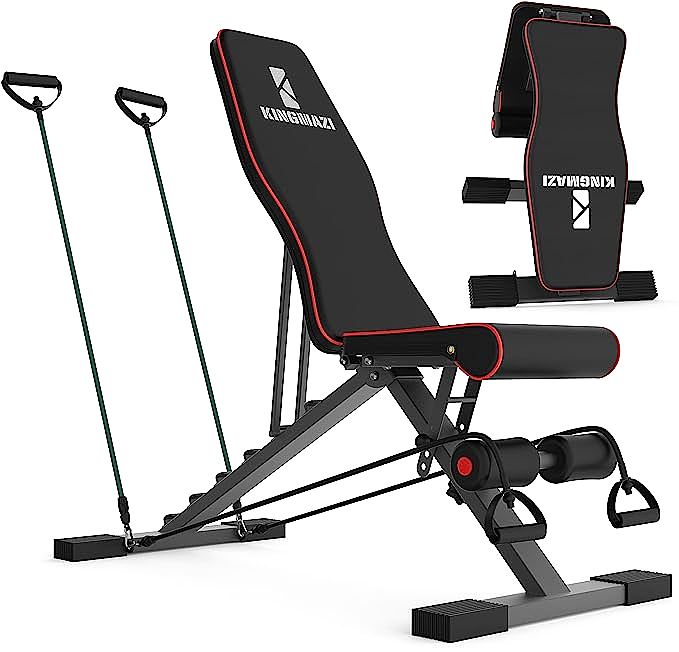
The Engineering of Adjustable Weight Benches: Why Steel Gauge and Load Path Determine Your Safety
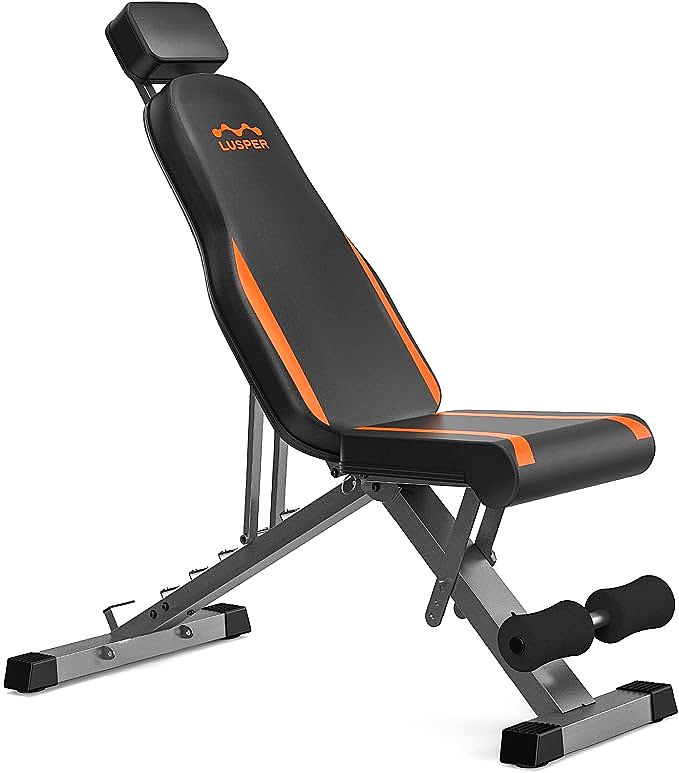
The Stability Paradox: Decoding "Sturdy" in Home Gym Weight Benches

The Physics of a Flawed Punch: Deconstructing the Titan Speed Bag Platform

The Unseen Engine: Why a Seated Calf Raise Machine Unlocks Your True Lower Leg Potential

The Engineer's Press: Why the Titan Single Post Bench is a Lesson in Biomechanics

The Soul of the New Machine: Unlocking the Science Behind the Modern Functional Trainer