Water Resistance Rowing: The Science Behind the Most Efficient Full-Body Home Workout

HARISON HR-W7 Water Rowing Machine
When fitness enthusiasts first encounter joint pain from high-impact activities, or when someone realizes their expensive treadmill has become a glorified clothes hanger, the question emerges with frustrating clarity: what actually works for a sustainable, effective workout at home? The answer lies in a technology that predates modern gym culture by millennia—water resistance.
The physics of moving through water creates something air fans and magnetic systems cannot replicate: a dynamic, self-regulating challenge that responds instantly to your effort. This is not about resistance levels you select from a dial. Instead, the water itself becomes your training partner, one that rewards intensity with proportionally increased difficulty and offers respite when you need to recover. Understanding why this matters requires looking at fluid dynamics, human biomechanics, materials engineering, and the surprising history of one of humanity's oldest forms of locomotion.
The Whispering Engine: Why Water Responds Differently
Step away from the whir of air fans or the predictable pull of magnets. Water resistance operates on fundamentally different principles, and understanding those principles reveals why it creates such an effective workout experience.
The core equation from fluid dynamics that governs water resistance is the drag equation: F equals one-half rho v squared CdA. In plain terms, the force required to move through water is proportional to the square of your velocity. Pull the handle faster, and the resistance does not simply increase—it increases disproportionately. This quadratic relationship means that doubling your rowing speed quadruples the resistance you feel. This is the same principle that governs everything from swimming to parachutes to the drag experienced by aircraft during landing.
This creates what engineers call organic challenge response. Unlike fixed resistance systems where you choose a level and it stays constant, water resistance engages in constant dialogue with your effort. Want a sprint interval? Pull with vigor and feel the water push back. Need active recovery? Ease off and the resistance naturally decreases. The machine adapts to you rather than forcing you to adapt to it. This feedback loop creates an honest relationship between effort and difficulty that electronic systems struggle to replicate authentically.
Aviation-grade polycarbonate houses the water tank in quality rowers. This material choice is not arbitrary—polycarbonate offers exceptional impact strength while maintaining optical clarity, allowing you to see the water churning with each stroke. The visual feedback becomes surprisingly meditative, transforming what could be repetitive motion into something engaging. When you watch the water spiral and vortex with each pull, you gain immediate confirmation that your effort is producing real physical work. The sound of water displaced with each stroke adds an auditory dimension that air resistance machines cannot match.
The sealing technology matters equally. EPDM (ethylene propylene diene monomer) rubber has become the standard for water tank seals because it withstands prolonged water exposure, temperature variations, and the chemical treatments used to keep the water clear. A properly sealed water tank means the machine remains mess-free and maintenance-free for years of regular use. This attention to materials science separates quality water rowers from cheaper alternatives that develop leaks within months, wasting your investment and creating frustrating maintenance demands.
The resistance itself is adjustable through water level. Adding more water increases the baseline resistance by increasing the mass the paddles must displace with each stroke. This gives users a crude but effective adjustment mechanism—the same physical principle that rowers have used for centuries when loading supplies onto a boat changed how it handled. More mass means more resistance at every speed, while less water creates a lighter feel for recovery sessions or beginner practice.
Your Body in Concert: The Biomechanical Symphony of Rowing
The claim that rowing engages 95 percent of the body's muscles sounds like marketing hyperbole until you examine the stroke mechanics in detail. The rowing stroke is actually a carefully orchestrated sequence that recruits different muscle groups in a precise cascade.
The Catch represents stored potential energy. You sit coiled forward, shins vertical, core braced, arms extended. This position prepares your entire kinetic chain for the powerful sequence to follow. The moment before the drive phase is not passive—it is active tension waiting to be released. Your breathing synchronizes with this position, preparing oxygen intake for the demanding drive phase ahead.
The Drive is the powerhouse phase, and it begins with the legs—specifically the quadriceps, gluteus maximus, and hamstrings. These large muscle groups generate the initial propulsion. As your legs extend, your core muscles (abdominals, obliques, and back extensors) engage to rotate your torso backward in a controlled lean. Only after this sequential activation do the arms begin their pull, engaging the latissimus dorsi, trapezius, rhomboids, and biceps to draw the handle toward your lower chest.
This cascade matters enormously for workout efficiency. The rowing stroke follows the principle of proximal to distal activation, using large muscle groups first to generate momentum before smaller muscles contribute. This is the same pattern used in throwing, punching, and most athletic movements throughout human history. The body evolved to move this way, which is why rowing feels natural even to beginners who have never touched a rowing machine before. Your nervous system already knows this movement pattern.
The Finish position shows full extension—legs locked, torso leaning back slightly, handle at chest level. A moment of peak muscular contraction. The Recovery then reverses the sequence with deliberate control: arms extend first, then torso hinges forward from the hips, finally knees bend as you slide back to the catch position. The recovery phase is not passive rest—it is controlled preparation for the next stroke, maintaining the rhythm that efficient rowing requires.
The cardiovascular benefits compound these muscular ones. Because rowing recruits such large muscle masses simultaneously, it creates significant cardiac demand despite the relatively low impact on joints. Your feet remain connected to the footplates throughout the stroke, eliminating the heel-strike forces that plague running and make it unsustainable for many exercisers. For people with knee issues, hip replacements, or simply aging joints, this low-impact characteristic opens doors that running and jumping exercises cannot.
The efficiency extends to caloric expenditure as well. Studies comparing different exercise modalities consistently show that rowing produces higher caloric burn per minute than cycling at comparable perceived effort levels. The involvement of major muscle groups in the upper body, core, and lower body simultaneously creates metabolic demand that isolated exercises cannot match. This makes rowing particularly valuable for those whose fitness goals include weight management alongside cardiovascular health.
The Engineering Beneath Your Workout
A machine designed to harness water resistance and translate it into human movement requires thoughtful engineering at every level. The frame must handle dynamic forces from users up to 350 pounds without flexing or wobbling—that energy must transfer into the workout, not be absorbed by the machine itself. When a machine wobbles, you lose power to the frame movement and gain nothing but anxiety about stability.
Alloy steel frames provide the necessary rigidity. The weight of a quality steel frame—typically 50 to 60 pounds for a home rowing machine—contributes to its stability during intense workouts. This mass becomes an asset when you are pushing hard, providing the inertial foundation that makes the workout feel solid and responsive rather than cheap and bouncy.
Aluminum alloy slide rails offer a different balance: sufficient strength for smooth operation while remaining light enough for the transport wheels to actually work when you need to store the machine vertically. The rail machining quality determines how smooth the seat glides—the tolerance between seat wheels and rail determines friction levels and long-term wear. Well-machined rails feel almost frictionless during the stroke.
Vertical storage can reduce the footprint to just over two square feet, a critical consideration for anyone living in an apartment or limited space. The practical reality of home fitness equipment is that it must fit into your living space, and good engineering solves this problem without compromising the workout quality. Transport wheels mounted on the machine's end make vertical storage practical even for users who might struggle to lift the machine's full weight.
The seat geometry deserves particular attention. Ergonomic contouring that fits the hip curve reduces pressure points during longer sessions. Seat dimensions matter for comfort—a seat length of nine to ten inches provides enough surface for proper weight distribution without being so large that it interferes with leg movement. The padding density balances comfort against support; too soft and you bottom out during the drive phase, too firm and pressure points develop.
Adjustable foot pedals with secure strapping accommodate users from under five feet to over six feet five inches, but the strapping does more than fit—it ensures proper foot placement for efficient power transfer from the legs. The angle of the footplates also matters for ankle mobility during the stroke cycle. Some designs include pivot adjustments for ankle angle, though fixed angles work well for most users.
The monitor system tracks multiple metrics: time elapsed, total strokes, distance covered (typically estimated based on stroke count and resistance level), calories burned (also estimated), and strokes per minute. These numbers provide immediate feedback about workout intensity and enable progress tracking over weeks and months. Watching your strokes-per-minute increase over time provides concrete evidence of improving fitness. App connectivity adds another dimension—virtual rowing courses, structured workout programs, and community engagement can transform what might otherwise feel repetitive into engaging challenges.
A Thousand Years of Rowing
While the technology is modern, the motion itself connects you to something ancient. Archaeological evidence suggests rowing as human-powered transport dates back at least seven thousand years, with Egyptian vessels depicted on tomb walls and Norse longships dominating northern waters. The longship, with its dozens of rowers moving in unison, represented a technological marvel of its era—coordinating dozens of humans to move massive vessels across open ocean.
The ancient Greeks organized rowing competitions as early as the fifth century BCE. Roman naval vessels relied on rowers for maneuverability before sails caught wind. Throughout centuries of maritime history, rowing remained essential—not ceremonial or recreational, but fundamentally functional. Naval battles were won or lost based on the training and discipline of the rowers who propelled warships into combat. The trireme's speed and maneuverability depended entirely on the physical conditioning of its crew.
This historical dimension matters because it connects your home workout to a motion pattern refined over millennia of human movement. The rowing stroke works with biology rather than against it, engaging the body's natural kinetic chains in a sequence that has evolved alongside our understanding of efficient movement. When you row, you participate in a movement vocabulary that humans have used for transportation, warfare, and sport since before written history.
The competitive rowing tradition also informs modern understanding of optimal technique. Centuries of refinement in competitive rowing have identified the precise sequence of muscle activation that produces the most efficient power transfer. Modern rowing machines embody this accumulated wisdom, translating what Olympic rowers have learned into a workout accessible to anyone with twenty minutes and a machine. The technology may have changed, but the fundamental movement pattern remains constant.
The Current Forward
Water resistance rowing represents a convergence of physics, physiology, and engineering that creates something genuinely different from other exercise modalities. The dynamic resistance that responds to your effort, the full-body engagement that recruits major muscle groups without joint impact, and the durability of modern materials all contribute to an experience that ancient rowers would recognize while delivering benefits they could not have imagined.
The machine invites you to find your rhythm, to feel the satisfying resistance of water, and to ride that current toward improved strength, endurance, and cardiovascular health. In a world of fitness gadgets that promise transformation through novelty, water rowing works because it works with fundamental principles rather than against them.
The best exercise equipment is not about adding complexity—it is about removing barriers between effort and results. When you pull the handle through water and feel resistance increase with your effort, you experience a direct relationship between input and output that no electronic system can replicate. That clarity of feedback, that honest response to your work, is what makes water resistance rowing not just effective but genuinely satisfying.
The next time you consider a home workout that actually sticks, remember that the whispering sound of water displaced with each stroke carries centuries of human movement wisdom. That sound is not noise—it is the physics of resistance speaking directly to your effort. It is the sound of your body doing what bodies have always done, powered by one of the most fundamental elements on Earth.
HARISON HR-W7 Water Rowing Machine
Related Essays

Stamina X AMRAP Rower Machine: Your Full-Body, Low-Impact Workout Solution

Stamina Magnetic Rower Machine (1130) - Full Body Workout at Home

Stamina ATS Air Rower 35-1403: Your Home Gym Solution for Full-Body Workout

XTERRA Fitness ERG160 Rower: Your Full-Body Workout Solution

Speediance Rower A1: Unlock Full-Body Fitness with the Science of Rowing

LUBBYGIM Rowing Machine: Your Full-Body Workout Solution at Home

YOSUDA Water Rowing Machine: Experience Authentic Rowing at Home

Panana Rower Machine: Your Compact, Quiet, and Full-Body Home Workout Solution
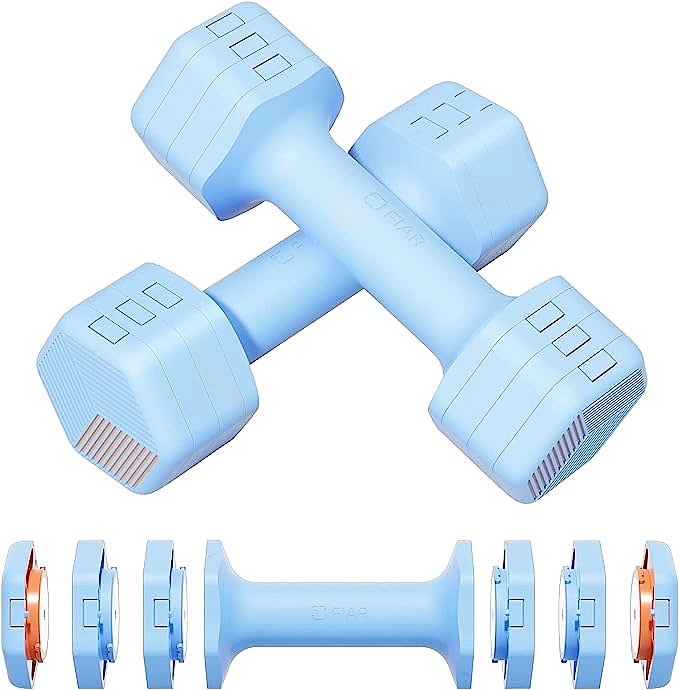
Fiar Adjustable Dumbbells: Your Home Gym Solution for Effective Strength Training
