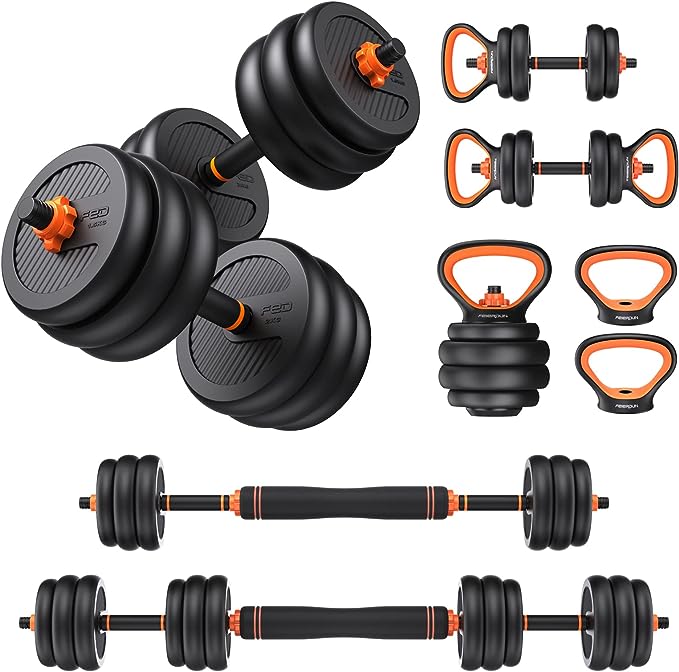
The Invisible Interface: What Happens Between Your Gym Equipment and Your Floor

WERCHO WER-M3 Exercise Equipment Mat
The crack appears on a Tuesday. You notice it while wiping down the floor after a workout -- a thin, branching fracture in the hardwood, spreading outward from the exact spot where the front foot of your treadmill has sat for the past eight months. The damage was invisible while it accumulated. Each footstrike transmitted force through the machine's steel frame, through the rubber feet, and directly into the wood. Hundreds of thousands of impacts, each one microscopic, their effects cumulative. The floor did not fail suddenly. It eroded patiently.
This scenario plays out in home gyms, apartments, and basements every day. The root cause is rarely the equipment itself. The root cause is the missing interface -- the engineered buffer between two materials that were never designed to coexist. Understanding what that buffer should do, and why it works when it works, requires looking past the mat and into the physics of energy transfer, material science, and a branch of engineering called tribology.

What Your Floor Actually Experiences
A running treadmill is not a stationary object. It is a force generator. Each footstrike on a treadmill belt produces a peak ground reaction force between 1.5 and 2.5 times the user's body weight, according to research published in the Journal of Biomechanics. For a 180-pound runner, that means each stride sends between 270 and 450 pounds of force through the machine's frame. At a cadence of 160 steps per minute, a 30-minute run generates roughly 4,800 discrete impact events.
Where does that energy go? In a commercial gym with reinforced concrete floors, the building absorbs it. In a second-floor apartment with engineered hardwood over plywood subfloor, the floor absorbs it. And floors are not designed to absorb repeated point loads. Wood fibers compress under sustained pressure, and the microscopic damage accumulates through a process called fatigue -- the same phenomenon that causes bridges to develop stress fractures over decades of traffic.
The solution is not thicker flooring. The solution is a material that converts kinetic energy into a form that does not damage the surface below it.
The Polymer Answer: How PVC Absorbs Punishment
Polyvinyl chloride, or PVC, belongs to a class of materials called viscoelastic polymers. The term is descriptive: these materials behave both like elastic springs (they store energy) and like viscous fluids (they dissipate energy as heat). This dual nature is what makes them effective as protective barriers.
When a force impacts a PVC mat, the long polymer chains within the material deform. Some of that deformation is elastic -- the chains stretch and then snap back, returning energy. But a significant portion is viscous -- the chains slide past one another, creating internal friction at the molecular level. That friction converts kinetic energy into a tiny amount of thermal energy. The force arrives as mechanical impact and leaves as warmth too small to feel.
This conversion is quantified by a material property called the loss factor, or tan delta. A higher tan delta means more energy is dissipated rather than transmitted. Flexible PVC formulations, particularly those designed for cushioning applications, achieve loss factors in the range of 0.1 to 0.3 -- meaning 10 to 30 percent of the vibrational energy that enters the mat is absorbed rather than passed through to the floor below.
The thickness of the material matters as much as its chemistry. A mat measuring 6 millimeters thick -- the specification of the WERCHO WER-M3 -- provides enough material depth for the polymer chains to deform meaningfully. A mat that is too thin, say 2 to 3 millimeters, bottomes out under concentrated loads. The foam compresses fully, and the remaining force transmits directly through to the floor, defeating the purpose entirely.

The Sound Problem: Why Your Neighbor Hates Your Treadmill
Noise complaints are the second most common reason people abandon home cardio equipment, right after loss of motivation. The physics of the problem are straightforward but poorly understood.
When a treadmill footstrike generates vibration, that vibration travels through the frame, through the floor, and into the structural elements of the building. Floors and joists act as sounding boards -- they amplify and transmit vibrations in the same way a guitar body amplifies string vibrations. What began as a localized thump becomes a low-frequency rumble that can travel through concrete, wood, and steel framing for considerable distances. In multi-unit buildings, this structure-borne noise is far more bothersome than airborne sound.
A dense PVC mat addresses this at the source. By absorbing vibrational energy before it reaches the floor, the mat reduces the amplitude of the signal entering the building structure. The effect is not complete silence -- that would require isolation mounts and floating floors -- but it is meaningful. A properly rated mat can reduce impact noise transmission by 15 to 25 decibels, which represents a perceived loudness reduction of roughly 60 to 70 percent. The difference between "annoying" and "barely noticeable" is often a matter of 10 decibels.
The mat achieves this through a combination of absorption and decoupling. Absorption, as described earlier, converts vibrational energy to heat. Decoupling breaks the direct mechanical path between the equipment and the floor. When the machine sits on a compliant mat rather than a rigid surface, the transmission pathway becomes less efficient, and less acoustic energy reaches the structure.
Friction: The Unseen Safety Feature
A less obvious but equally important property of an equipment mat is its ability to stay put. Exercise machines generate lateral forces -- side-to-side and front-to-back -- during use. A treadmill belt moving under a runner's weight creates horizontal shear forces. A rowing machine produces powerful fore-aft loading during each stroke. If the machine slides, two problems arise: the machine may shift into an unsafe position, and the sliding itself can scratch or gouge the floor.
The solution is friction, specifically the coefficient of static friction between the mat's bottom surface and the floor material. A textured PVC mat creates what tribologists call mechanical interlocking -- microscopic peaks and valleys on the mat surface engage with the microscopic texture of the floor, creating resistance to sliding. This is not adhesive bonding. It is pure physical resistance, and it increases with the weight pressing down on the interface.
The WERCHO mat's dual-surface design reflects this principle: a smooth top surface that prevents dust infiltration into equipment mechanisms, and a textured bottom that maximizes grip. The engineering is simple but effective. More friction means more stability. More stability means less wear on the floor, less stress on the equipment frame, and less risk of the machine creeping toward a wall or door during use.

Density and Recovery: Why Some Mats Fail
Not all PVC mats perform equally. The key differentiator is density. High-density PVC foam, typically above 1.2 grams per cubic centimeter, resists permanent deformation under sustained loads. When you place a 200-pound treadmill on it, the material compresses but recovers when the load is removed. Low-density foam, by contrast, develops permanent indentations -- the kind that remain visible long after the equipment is moved.
This recovery behavior is governed by the material's compression set resistance, a standard measure in polymer testing. A compression set below 25 percent is considered good for protective matting, meaning the mat recovers at least 75 percent of its original thickness after prolonged compression. This property is what separates a mat that lasts five years from one that needs replacement after six months.
The 6mm thickness specification of the WERCHO mat represents a deliberate engineering compromise. Thicker mats provide better absorption and noise reduction but become unwieldy, making it difficult to position equipment and creating trip hazards at the edges. The 6mm specification sits at the threshold where protection and practicality overlap -- sufficient for treadmills, ellipticals, and rowing machines without creating an unstable platform.
The Lifecycle Question Nobody Asks
There is an honest trade-off worth acknowledging. PVC is a synthetic polymer derived from petroleum and chlorine. Its production involves vinyl chloride monomer, a known human carcinogen, and its disposal poses challenges because PVC does not biodegrade and releases hydrochloric acid and dioxins when incinerated. These environmental facts do not negate the material's functional performance, but they do inform a complete assessment.
The counterargument is one of durability. A PVC mat that lasts five years under daily use has a lower per-year environmental footprint than a biodegradable alternative that degrades and requires replacement every six months. The environmental calculus depends on the product's actual service life, not just its raw material composition. For consumers who prioritize sustainability, natural rubber mats offer a biodegradable alternative with comparable performance characteristics, though at a higher price point.
The Interface Principle
The underlying lesson extends beyond gym equipment. Every physical interaction between two objects benefits from a properly engineered interface. Tires and road surfaces. Shoes and running tracks. Buildings and earthquake foundations. The principle is the same: manage the transfer of energy so that both systems survive the encounter without cumulative damage.
An equipment mat is not an accessory. It is a structural component of your home gym -- as essential to the system's longevity as the frame bolts on your treadmill or the bearings in your elliptical. Without it, the floor and the machine are engaged in a slow-motion collision that neither was designed to withstand. The mat does not eliminate the forces. It translates them into a form that the floor can tolerate indefinitely.
And that is the difference between a floor that lasts and a floor you replace.
WERCHO WER-M3 Exercise Equipment Mat
Related Essays

Why Hip Abductors Matter for Squat Strength

Home Gym Biomechanics: Why Station Resistance Keeps Constant as You Move

Progressive vs Isotonic Resistance: How the Curve Changes Training

Magnetic Home Rower: The Silent Full-Body Workout Partner

CAP 150lb Dumbbell Set vs Adjustable: Home Gym Guide
CAP 150lb Dumbbell Set vs Adjustable: Home Gym Guide
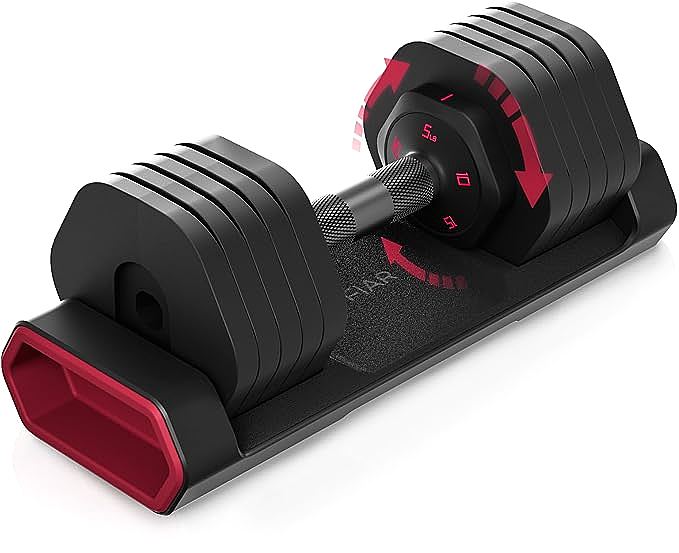
Fiar Adjustable 5-25lb Dumbbells - Compact and Versatile Strength Training
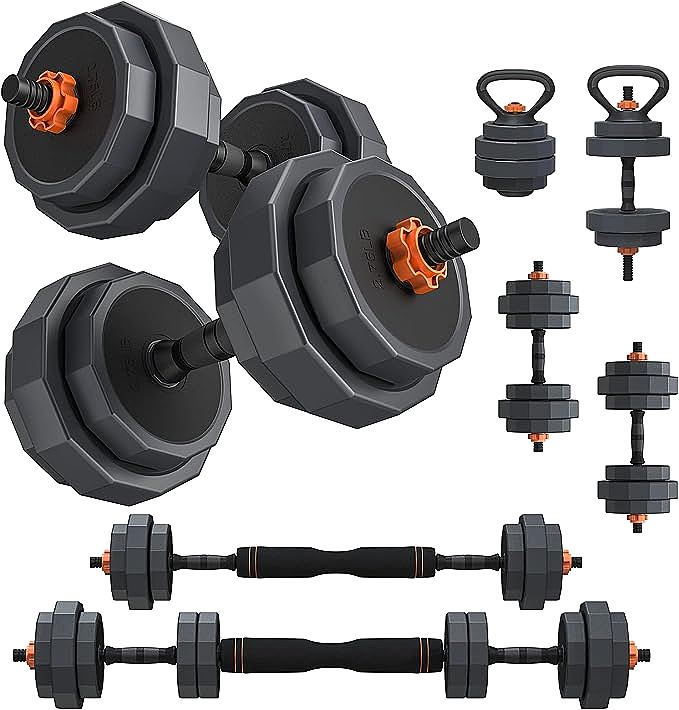
: Lusper Adjustable Weight Dumbbell Set - Versatile and Convenient Home Gym Equipment
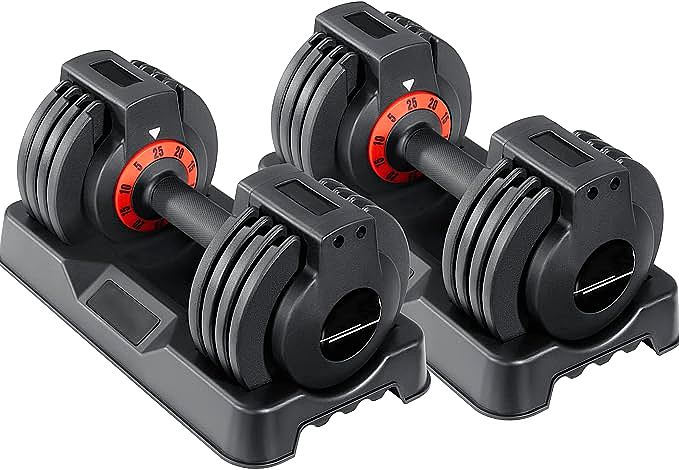
ACCPO DB2518 Adjustable Dumbbells Set - Convenient and Space-Saving Home Gym Equipment