Progressive vs Isotonic Resistance: How the Curve Changes Training

BowFlex PR1000 Home Gym Workout Systems
Stand in front of any strength rack and the word resistance is easy to picture. A dumbbell or barbell sits still, and it does not change its weight once you start moving it. That is the defining trait of isotonic resistance: the load stays fixed while your joints move through their full arc.
It is the simplest resistance model in the gym, and it is the one most people assume when they hear the phrase progressive vs isotonic resistance.
But that assumption hides a second model that is just as common and arguably better matched to how muscles actually work. The second model is progressive, or variable, resistance. Instead of a fixed load, the load itself climbs as the movement progresses. The start of a rep is lighter and the finish is heavier, and the curve that connects the two shapes is called the resistance curve.
Which of the two a given machine, dumbbell, or cable delivers is not a branding matter. It is a matter of physics, and it decides which muscles are loaded hardest, at which joint angles, and how safely a rep can start.
What Separates Progressive Resistance From Isotonic Training?
Isotonic training applies an almost identical force at every joint angle. A fifty pound dumbbell is fifty pounds at the bottom of a curl, in the middle, and at the top. The load is dominated by gravity acting on a fixed mass, so nothing about the movement changes the number on the plate. This constancy is the whole reason a free weight is the gold standard for heavy strength work. If you want to move the most weight possible at one specific position, you use a fixed load.
Progressive resistance is the opposite. The load rises through the range of motion, peaking near full contraction. A machine built on flexible composite rods or on elastic bands does exactly this. The label on the rod is not a promise of a constant poundage. It is a statement of the maximum force the rod can apply at the point of greatest stretch, and every moment before that, the force is lower. That single difference reorganizes the whole question of which part of a movement is the hardest.
Why Does a Resistance Curve Change How Muscles Work?
Muscles do not generate the same force at every length. This is the length tension relationship, a fixed law of muscle physiology. A muscle is weakest when it is fully stretched and strongest near its optimal length, which usually falls in the middle or toward the end of most reps. This fact is what makes a constant load a mismatch with the body's own strength curve.
A dumbbell applies its heaviest demand at the very start of a concentric rep, when the target muscle is longest and weakest. It asks the most from the joint precisely where the muscle is least capable.
A progressive load asks less there and more toward the end, which is where the muscle is strongest. The result is not a weaker workout. It is a better matched one, and the match lowers the risk of injuring the joint at its most vulnerable moment while still overloading the muscle where it can handle the challenge.
A study of the back squat published in the Journal of Strength and Conditioning Research in 2026 found that free weight squats create a sticking region because the load stays constant while the required force changes. Adding variable, elastic resistance to the lift lowered the deceleration through the sticking point and raised both velocity and power output. The fix was not to lift heavier. It was to stop forcing the load to stay flat.

How Do Cables and Rods Deliver Different Resistance?
Three common devices sit on a spectrum between a perfectly flat load and a perfectly rising one. A free weight is the flat end. A cable pulley system pulls with roughly constant tension through an arc, which is different from both a plate and a band, because the tension comes from the weight stack and the cable angle.

An elastic band, or a machine built on flexible composite rods such as the ones found in a Bowflex style home gym, is the rising end. The more the element bends or stretches, the harder it resists.
The pulley placement is what gives a cable system its character. Set the pulley so the moment arm grows through the movement and the cable approximates a progressive curve. Set it so the angle barely changes and the cable behaves almost like a constant load. Rod systems need no such adjustment. Their resistance is built into the elastic property of the rod itself, which means the curve is consistent no matter which exercise is attached to it.
Which Approach Builds Strength Faster?
The short answer is that no single device beats the other. The question progressive vs isotonic training really comes down to is where in a rep you want the hardest load to land. Both major training bodies, the American College of Sports Medicine and the National Strength and Conditioning Association, put the same word at the center of their position statements: progressive overload.
A rep is only a stimulus if it was harder than the last time you did it. Equipment decides how the load is applied within the set, but the long term gain comes from the gradual, planned increase of that load.
Where the two models genuinely differ is how much they help at the ends of a rep. A fixed load is the most efficient tool for building one rep maximum strength, because it lets you apply the heaviest possible force at the point you will actually be tested.
A progressive load is the most efficient tool for building the strength and resilience of the range, because it forces the muscle to work hard where it is strongest and eases it where it is weakest. Neither is better in absolute terms. Each is better at a different target.
A 2026 meta analysis published in Sports Medicine found that in studies comparing high and low load isotonic training, researchers routinely add non specific tests like isometric and isokinetic measurements, precisely because a flat load tells you so little about how well it transfers to the rest of the range. The whole point of measuring is to see what a curve shape the body actually produced, not just what the plate said.
Who Should Choose Rod Based Home Gyms?
A home machine with a progressive resistance curve is a very specific tool. It is built for the person who wants joint friendly, full range training without being required to hold or swing a heavy plate. That makes it a natural fit for three groups.
Beginners and general fitness users benefit most, because the light start of a rep lets a new muscle learn a movement without being slammed by its own load at its weakest angle.
The same low start is why the format is common in rehabilitation and in older adult training, where protecting the joint through the first quarter of a rep matters more than moving the absolute maximum. The higher repetition, moderate load style of work that these machines favor also matches the goal of most people who train for tone and endurance rather than for a competition.
They are not the tool for the person whose goal is a heavier one rep max.
A maximal lifter wants the fixed, unchanging number of a barbell, because that is the variable they can measure, test, and beat next month. A rod system, which can also slowly lose resistance over time through a material property called creep, does not hand that lifter a fixed target. That person should simply go to a rack, and no one who has tried will argue.

How Do You Pick the Right Resistance Style for Your Goals?
The decision is not about which technology is smarter. It is about which curve matches the one specific outcome you are trying to hit next. Ask one question before you touch the equipment: where in the rep do I need the most force.
If the answer is the heaviest possible point of a lift, for a maximal strength test or a sport move measured at one angle, use a constant load.
A barbell and dumbbells are the cleanest way to do that, and nothing else matches them for a straight, uncheated number.
If the answer is the whole range, or if the answer is simply unclear, use a progressive curve. Elastic bands, variable resistance machines, and cables set for a rising moment arm all push the load toward the strong end of the movement, which is where the muscle can use it.
The two are not rivals. They are two tools for two curves, and a serious program mixes them. Use a flat load to build the raw number, and a rising load to keep the joint healthy and the range strong around it. The only curve that truly fails is the one where the resistance is chosen to match nothing, where the load is the same at every angle even though the body's own strength is not.
BowFlex PR1000 Home Gym Workout Systems
Related Essays

Home Gym Biomechanics: Why Station Resistance Keeps Constant as You Move

Why Hip Abductors Matter for Squat Strength

CAP 150lb Dumbbell Set vs Adjustable: Home Gym Guide
CAP 150lb Dumbbell Set vs Adjustable: Home Gym Guide
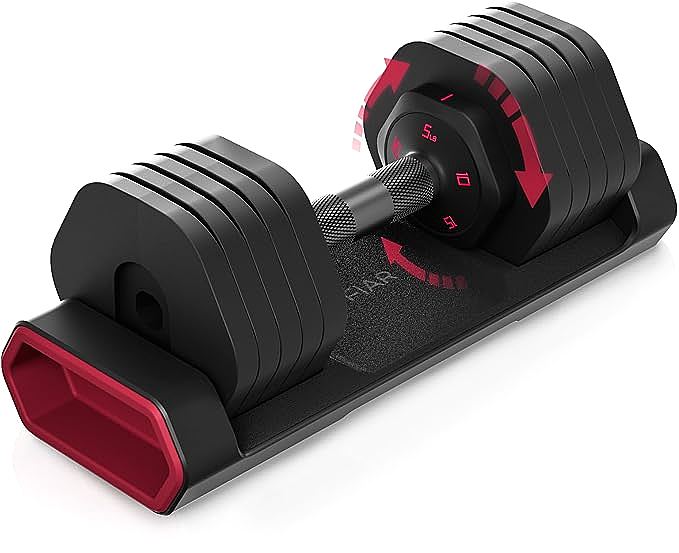
Fiar Adjustable 5-25lb Dumbbells - Compact and Versatile Strength Training
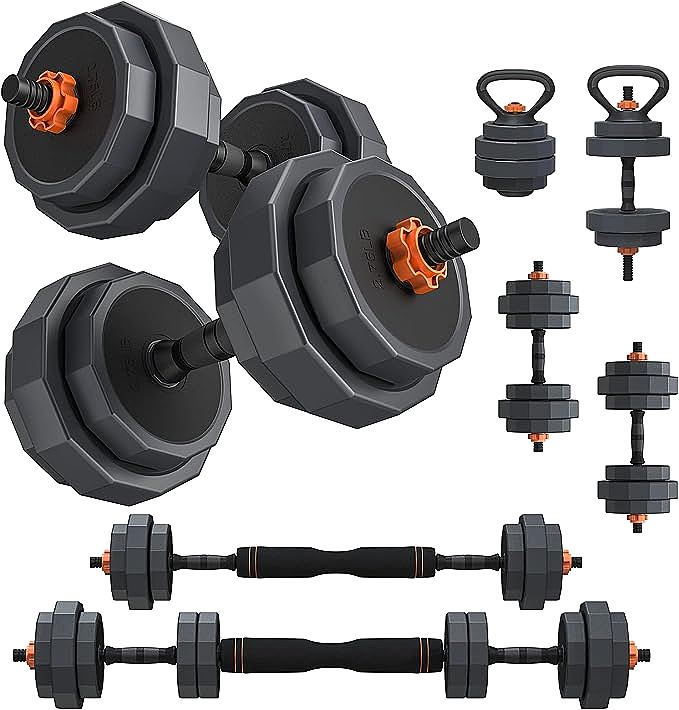
: Lusper Adjustable Weight Dumbbell Set - Versatile and Convenient Home Gym Equipment
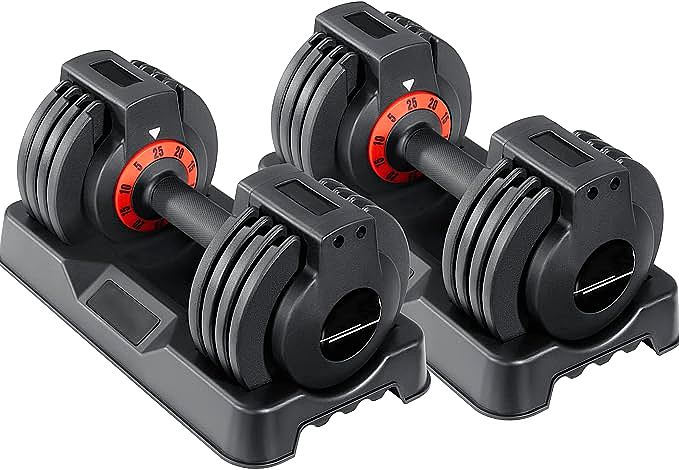
ACCPO DB2518 Adjustable Dumbbells Set - Convenient and Space-Saving Home Gym Equipment
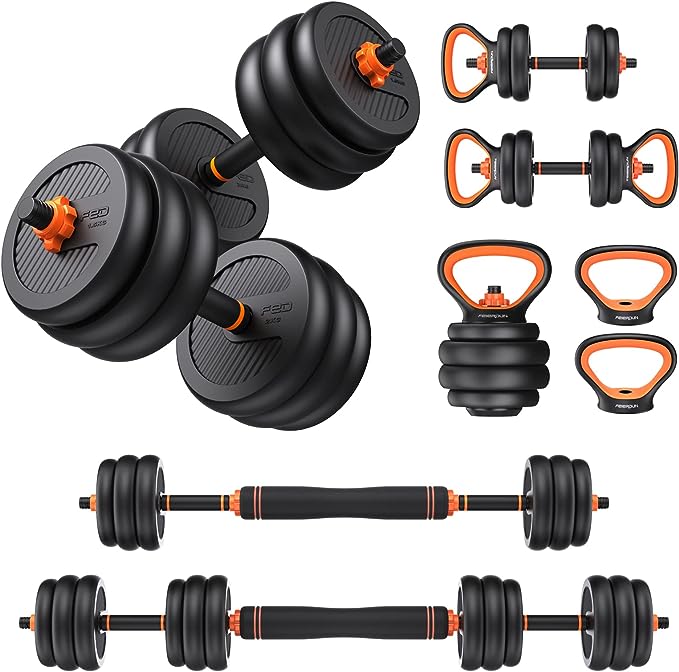
FEIERDUN Adjustable Dumbbells - Versatile and Customizable Strength Training
CAP 150lb Dumbbell Set vs Adjustable: Home Gym Guide
