The Science of Whole-Body Vibration: Why Your Muscles Respond to Frequencies You Cannot Hear
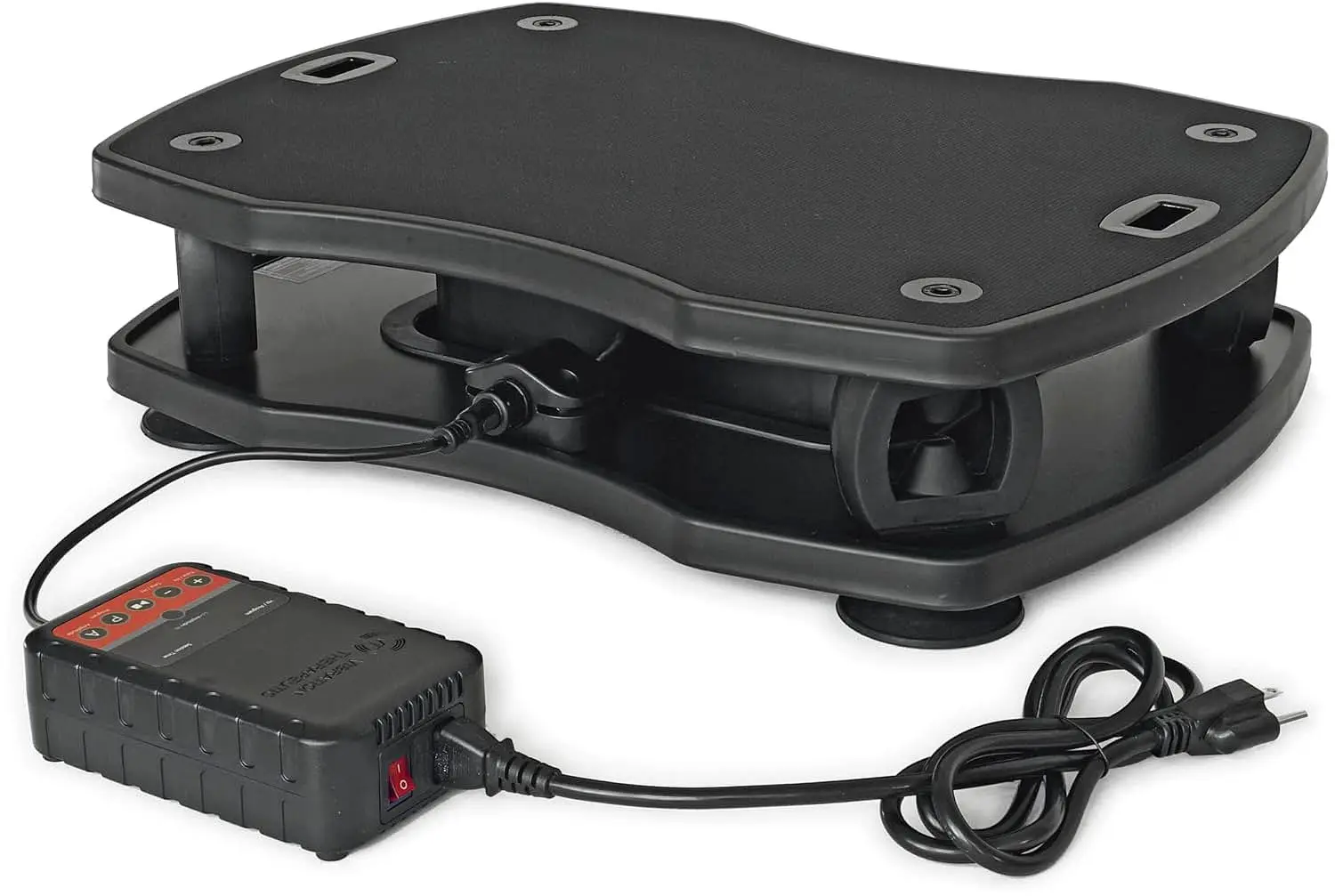
VT VIBRATION THERAPEUTIC VT007 Vibration Plate Exercise Machine
The Problem No One Explains
You stand on a vibrating platform in a clinic or gym. The surface hums beneath your feet. Within seconds, your leg muscles begin contracting involuntarily — short, rapid twitches you did not ask for and cannot fully control. Thirty seconds later, your thighs burn as though you just climbed four flights of stairs. The sensation feels oddly specific: not the dull ache of fatigue, but the sharp, rhythmic engagement of muscle fibers being recruited in a pattern no voluntary exercise replicates.
What just happened? The platform moved less than three millimeters. Your muscles responded as if you had performed dozens of squats. Somewhere between the mechanical oscillation and your nervous system, a signal was translated — and most people using these machines have no idea what that signal is, why it works, or whether the frequency setting on the device even matters.
It does. The frequency matters more than almost any other variable on the machine. And the physics behind it traces back to principles that engineers and physiologists have studied for over a century.
How Mechanical Oscillation Becomes Muscle Contraction
Every object in the physical world has a natural frequency — a rate at which it tends to vibrate when disturbed. A wine glass shatters at a specific pitch. A bridge oscillates dangerously when wind matches its resonant frequency. Your muscles are no different. Skeletal muscle tissue has a natural oscillation range between approximately 10 and 50 Hertz. This is not a metaphor. It is a measurable biomechanical property, documented in peer-reviewed research on muscle tonus and tissue viscoelasticity.
When a vibration plate operates within or near this frequency window, something counterintuitive happens. The muscle does not simply absorb the energy passively. Instead, the oscillatory input drives a reflexive contraction cycle known as the tonic vibration reflex, or TVR. First described in neurophysiology research in the 1960s, TVR occurs because vibration stimulates muscle spindle receptors — tiny sensory organs embedded within muscle fibers that detect stretch. When vibration mimics rapid stretching at the right frequency, these spindles fire signals to the spinal cord, which responds by triggering motor neurons to contract the same muscle. The loop is fast, involuntary, and self-reinforcing.
The practical result: a vibration plate set to 25 Hertz can cause your calf muscles to contract and relax 25 times per second without any conscious effort. At 40 Hertz, the rate doubles relative to a 20 Hertz setting. The relationship is linear. The biological response is not — different frequencies recruit different muscle fiber types, produce different levels of G-force, and create distinct mechanical stress profiles across joints.
This is why the frequency range of a vibration platform is not a cosmetic specification. It is the primary engineering variable that determines what happens inside your body when you stand on it.
Why 15-40 Hertz Became the Engineering Target
The most common frequency range for whole-body vibration plates — roughly 15 to 40 Hertz — was not chosen at random. It represents the intersection of three constraints: physiological effectiveness, mechanical safety, and the physics of resonance.
At frequencies below 15 Hertz, the vibration is slow enough that the tonic vibration reflex does not fully activate. The body experiences the motion as a wobble rather than a stimulus. Muscle spindle receptors fire intermittently, producing inconsistent contractions. Research published in vibration therapy journals consistently shows diminished neuromuscular activation below this threshold.
Above 40 Hertz, the equation changes in a different direction. The muscle cannot complete full contraction-relaxation cycles fast enough to keep pace with the input. The tissue begins absorbing energy as heat rather than converting it into mechanical work. Joint capsules and intervertebral discs experience higher peak accelerations. The risk of discomfort and soft-tissue irritation increases measurably. A systematic review of vibration therapy safety parameters notes that prolonged exposure above 50 Hertz raises concerns about cartilage stress in load-bearing joints.
The 15-40 Hertz window sits in the zone where muscle spindles respond strongly, fiber recruitment is efficient, and the mechanical load on joints remains manageable. Within this band, lower frequencies (15-25 Hertz) tend to favor balance training and proprioceptive recruitment — the smaller stabilizing muscles that control joint position. Higher frequencies (30-40 Hertz) shift emphasis toward larger motor units in prime mover muscles like the quadriceps and glutes.

Some plates on the market extend beyond this range. A platform like the VT007, manufactured by Vibration Therapeutic in Minnesota, offers settings from 5 to 40 Hertz — giving users access to the lower proprioceptive band and the upper strength band. But the inclusion of frequencies outside the core window does not change the underlying principle. The physiological response peaks inside that 15-40 Hertz corridor because that is where human muscle tissue is most responsive to oscillatory input.
The Amplitude-Frequency Partnership
Frequency gets most of the attention in vibration therapy discussions. Amplitude — the physical distance the platform surface travels in each oscillation cycle — is equally critical, but less understood. Together, these two variables determine the G-force the body experiences, which is the actual mechanical driver of physiological adaptation.
The math is straightforward for sinusoidal motion. Peak acceleration is proportional to the square of frequency multiplied by amplitude. This means a small change in frequency has a much larger effect on G-force than an equivalent change in amplitude. Doubling frequency quadruples acceleration, assuming amplitude stays constant. Doubling amplitude only doubles it.
This quadratic relationship has direct engineering implications. A plate operating at 30 Hertz with 2 millimeters of amplitude produces roughly 3.6 G of peak acceleration. The same plate at 15 Hertz with the same amplitude delivers approximately 0.9 G. Same machine, same amplitude setting, but the body experiences four times the mechanical loading simply because the frequency doubled.
Manufacturers exploit this asymmetry intentionally. By keeping amplitude low — typically 1.5 to 3 millimeters for linear vibration plates — they can generate substantial G-forces at higher frequencies without creating the large, joint-straining excursions that would occur with higher amplitude. The platform barely moves, but the acceleration is significant. This is why standing on a well-engineered vibration plate does not feel like standing on a jackhammer, even though the G-forces can exceed 3 G. The displacement is tiny. The speed of that displacement is not.
Linear vibration plates produce pure vertical displacement — the surface moves straight up and down. Oscillating plates, by contrast, pivot around a central axis, creating a seesaw motion where one foot rises while the other descends. Each design has distinct mechanical consequences. Linear platforms deliver uniform loading across both legs, making the G-force calculation more predictable. Oscillating platforms introduce rotational forces through the ankles and knees, which some users find less comfortable at higher intensities.
From Zander to Space Stations: The Forgotten History
The idea of using mechanical vibration for therapeutic purposes is older than most people realize. In the 1860s, a Swedish physician named Dr. Gustav Zander began developing mechanotherapy devices — elaborate machines powered by steam engines and pulleys that moved patients' limbs through controlled ranges of motion. Zander's institutes, which spread across Europe and into the United States by the 1890s, treated muscle weakness, joint stiffness, and circulatory problems using repetitive mechanical stimulation. His underlying premise was that rhythmic external forces could augment the body's own movement patterns to accelerate recovery.
Zander could not have known about tonic vibration reflexes or muscle spindle physiology — those discoveries were decades away. But his clinical intuition was correct: cyclic mechanical loading, applied at the right rhythm, produces measurable physiological changes. His devices used low frequencies by modern standards, limited by the speed of steam-driven mechanisms, but the principle of externally driven rhythmic muscle activation was established.
The modern chapter of whole-body vibration began in the 1960s with the Soviet space program. Cosmonauts returning from extended orbital missions exhibited significant bone density loss and muscle atrophy — consequences of prolonged microgravity exposure. Soviet scientists, led by biomechanist Vladimir Nazarov, began experimenting with vibration platforms as a countermeasure. The logic was grounded in Wolff's Law, the orthopedic principle stating that bone adapts its density and structure in response to the mechanical loads placed upon it. If microgravity removed the loading stimulus, vibration could reintroduce it artificially.
The results were encouraging enough that vibration training became standard protocol for Soviet cosmonauts. Western space agencies adopted similar approaches in subsequent decades. The underlying physics had not changed since Zander's era, but the engineering had: electric motors could now deliver precise, high-frequency oscillations that steam-driven pulleys never could. What began as a clinical curiosity in nineteenth-century Stockholm became a validated countermeasure for one of spaceflight's most persistent physiological challenges.

What G-Force Actually Does to Tissue
The G-force number on a vibration plate specification sheet tells you the peak acceleration the body experiences during each oscillation cycle. But acceleration is a transient event — it lasts milliseconds. The physiological question is what those repeated transient accelerations accumulate into over the course of a session.
At moderate G-forces — 1.5 to 3 G — the mechanical loading mimics the ground reaction forces produced during brisk walking or slow jogging. The difference is repetition rate. A 30-second exposure at 30 Hertz delivers 900 loading cycles. A person would need to take 900 steps to accumulate the same number of impact events through walking. This concentrated mechanical dose is the core proposition of vibration therapy: not a novel force, but a familiar force delivered at an accelerated cadence.
Bone tissue responds to this loading through the mechanotransduction pathway — the process by which mechanical stress at the cellular level triggers biochemical signaling cascades. Osteocytes, the mature bone cells embedded in the mineralized matrix, act as strain sensors. When vibration-induced acceleration deforms bone tissue, even at microscopic scales, osteocytes release signaling molecules that influence both osteoblasts (bone-building cells) and osteoclasts (bone-resorbing cells). The net effect, observed in multiple clinical studies of whole-body vibration in postmenopausal populations, is a modest but measurable increase in bone mineral density at the hip and spine over periods of six to twelve months.
Muscle tissue responds through a different mechanism. The tonic vibration reflex recruits motor units in a pattern that differs from voluntary exercise. In a voluntary contraction, the nervous system typically recruits smaller, fatigue-resistant fibers first and larger, more powerful fibers as force demands increase — a principle known as Henneman's Size Principle. Vibration-induced reflexes appear to bypass this orderly recruitment to some extent, activating a broader cross-section of fiber types simultaneously. This may explain why users report muscle fatigue patterns from vibration that feel distinct from traditional resistance exercise.
Where Engineering Meets Physiology
The design choices embedded in a vibration platform reveal assumptions about the human body. A linear plate assumes that vertical acceleration is the most physiologically relevant vector — a reasonable assumption given that gravity itself acts along this axis. An oscillating plate assumes that alternating unilateral loading provides a more functional stimulus, engaging the postural control system with each seesaw cycle. Neither assumption is universally correct. The physiology depends on the user's condition, goals, and tolerance for different loading patterns.
Frequency programmability matters because a single frequency cannot address all physiological targets. A 20 Hertz session emphasizes proprioception and balance. A 35 Hertz session emphasizes muscular strength and bone loading. A well-engineered platform provides access to both, without requiring the user to understand the underlying physics. The engineering constraint is that building a motor and drive system capable of maintaining stable amplitude across a wide frequency range is significantly harder than building one optimized for a single frequency. This is why many inexpensive plates offer only one or two fixed speeds.
The amplitude constraint — keeping displacement to 1.5-3 millimeters — reflects a safety calculation. Larger amplitudes generate higher peak forces, but they also create larger joint excursions that can stress ligaments and compress intervertebral discs beyond their elastic tolerance. The engineering trade-off is clear: keep amplitude small, let frequency do the work, and accept that the platform will barely move visibly while delivering forces equivalent to multiple body weights.
The Open Question of Dose
Despite decades of research, the optimal vibration dose for specific outcomes remains unsettled. A 2018 meta-analysis of whole-body vibration studies found that protocols varied enormously across trials — frequencies ranging from 15 to 45 Hertz, amplitudes from 0.5 to 8 millimeters, session durations from 30 seconds to 30 minutes. The heterogeneity made it difficult to isolate which variables drove the observed effects.
What the physics predicts clearly is that frequency and amplitude interact multiplicatively, that the 15-40 Hertz band covers the most physiologically responsive range for skeletal muscle, and that keeping amplitude low while varying frequency gives the most controllable dose-response curve. The biology — how individual tissue types, age groups, and clinical conditions respond to specific combinations — is still being mapped. The engineering, at least, is governed by equations that do not change.
VT VIBRATION THERAPEUTIC VT007 Vibration Plate Exercise Machine
Related Essays

Vibration Plate for Lymphatic Drainage: Setup, Stance and Recovery

The Mentor's Guide to Vibration Plates: Oscillation vs. Linear vs. 4D

What Vibration Plates Actually Do for Weight Loss and Lymph Drainage

The Science Behind Vibration Platforms: From Space Research to Your Living Room

When Rhythm Meets Impact: The Science Behind Music-Driven Boxing Workouts

The Democratization of Somatic Technology: From Astronaut Training to Living Room Wellness

The Vibration Plate 'Peripheral Trap': Why Manuals and Accessories Matter More Than Motors

The Passive Activation Revolution: How Vibration Plates Awaken Your Body's Potential

Decoding "4D" Vibration: What Oscillation, Linear & Pulsation Motors Actually Do
